Beautiful Botswana - A Hackberry Farm Nature Photography Workshops field report

“Welcome Home,” Alicia tells me as we arrive at the camp she helps manage. It’s been a year since I brought a group here, but in most ways, it seems like yesterday.
Man, the year passed by fast. I am so glad to be back.


Culturally and geographically, Botswana is miles away from where I’m from, but I really do feel like this is my second home when I come here. The people and places here just fit. For the past five years, I’ve made nearly annual trips to this southern African country. Each time feels like a homecoming as I’ve made lifelong friends who live here.
Soon, we will all be getting acquainted with our new settings and anticipating another incredible day. So far, our excursion has been unbelievable: each day offering new photographic opportunities and challenges that bring out the best in everyone.
We started our adventure in Victoria Falls. One of the seven wonders of the world, the falls is recognized for its immense size as the Zambezi River slides over a giant chasm in a sheet of basalt. More than a mile wide and 350 feet tall, the falls are recognized as the largest sheet of falling water on the planet.

We spend time walking the falls and experiencing the unusually blue-sky rain that falls over parts of the path as the mist that erupts from the falls plummets back to earth in the form of rain. As a result, a large swath around the falls (of the otherwise arid Zimbabwe) is a rainforest.
It’s a remarkable sight.
The day’s activity is punctuated by a brief visit to Zambia, shopping and drinks in downtown Victoria Falls, and retiring back to our five-star accommodations along the banks of the Zambezi River. At this lodge (like the other places we stay), the food is impeccable, and the settings in which we dine could be out of a movie.

At our lodging, the international crowd that’s convened here makes you think that Humphrey Bogart is milling around here somewhere. The place is exotic, luxurious, and lavish.
After a two-night stay in Zimbabwe, we transit along the highway for the short trip to Kasane, Botswana. After a brief and uneventful border crossing, we arrive at the Pangolin Lodge for the first triad of this adventure. I’ve been to this place a bunch in the past, so it’s always good to see old friends when I arrive.
After an orientation and high tea, we take to the water to begin photographing wildlife along the Chobe River for the nature photography workshop. This area is famous for elephants, and it doesn’t take long until we see a quartet of pachyderms swimming the river to an island that straddles the Botswana/Namibia border. While the big elephants deftly swim the river channel, the smaller one snorkels across. Once they reach the other side, they take a quick mud bath, climb onto the island, and disappear as they wander the island in search of good grazing.

From there, it’s nearly constant action each time we launch the boat up and down the river.
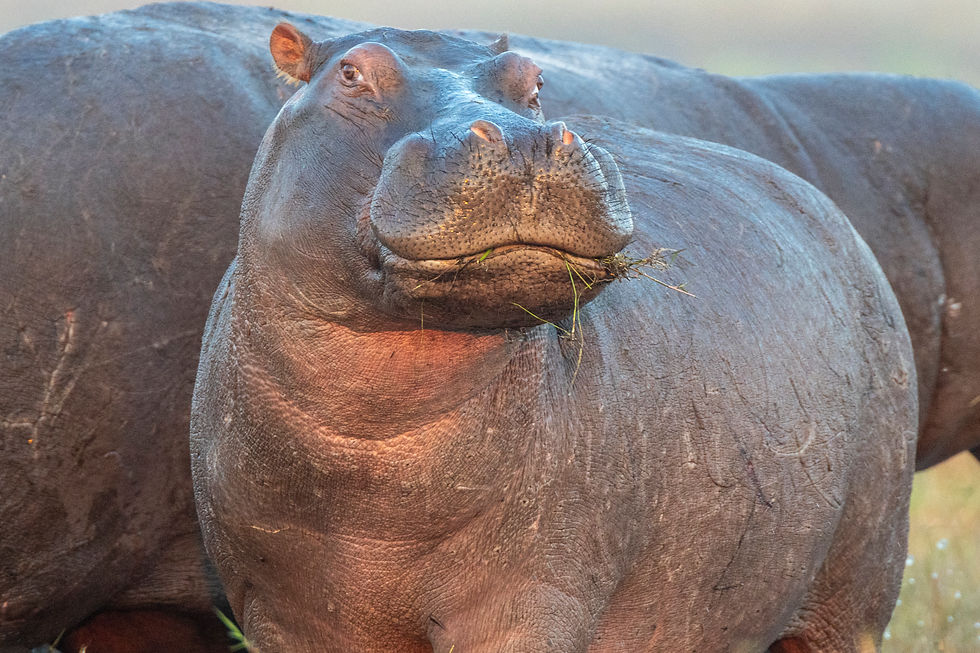
Impala, waterbuck, and scores of birds are among the animals we’ll see. The stars of the experience are the big animals. Hippos are abundant, and their animated behaviors and unusual vocalizations are always a favorite.
On our second evening, we find a big pod of hippos lying in the shallow water. While we watch, they yawn, jockey for position, and spar with one another. The photo possibilities are numerous, and as the orange sun sets over the Chobe plains, a calm settles over the area, and the quiet satisfaction of capturing memorable photos abides with the group.

Our time in Chobe is well spent as each boat ride and each safari drive provides amazing encounters each time we venture afield. One time, we see hundreds of nesting birds flying in and out of a rookery; the next, a pride of lions wrestling with one another in the cool morning air.
The way this trip is designed is to be incremental: each place we go, we’ll see some of the same things, but each camp, each destination holds something new.

As we take a bush plane to our next destination, the Okavango Delta awaits. The delta is a large swath of inland swamp in which the Okavango River flows and, curiously, never reaches the ocean. A UNESCO World Heritage Site, the river flows into the Kalahari Basin, where it eventually just soaks into the ground. It is one of the few places on the planet where a river system never reaches the sea, creating a vast stretch of green in an otherwise arid landscape.
The result? A landscape rich in history and rich in biodiversity.
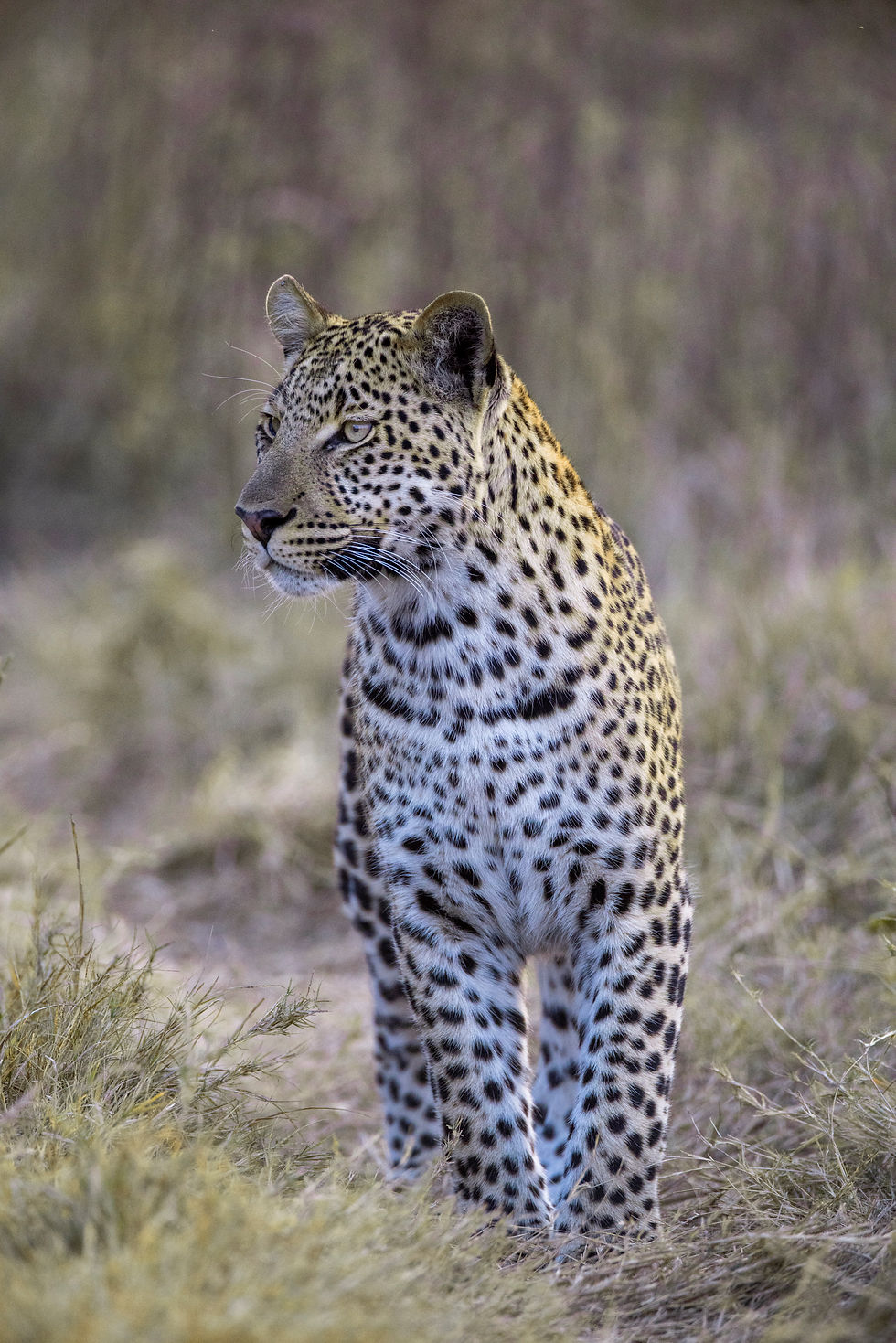
We land at the dirt airstrip, meet our guide, and then head into camp for a short break before we go on our evening game drive. In the evening, it doesn’t take long until we find a beautiful female leopard out hunting for game to feed her two young that she’s hidden out in the woods.

Jumping into the tree, she scans the plains for a possible meal. She’s merely feet from us, and we photograph her in soft evening light - her spots beautifully mottled against the burnt orange and tan base of her fur.
Soon, she hops down and begins to roam a bit. We follow for a short time and collect even more photographs of the serene moment. It’s all so surreal to be this close to one of Africa’s most efficient predators.

Unknown to us at the time, just a host distance away, the apex predator roams to their resting spot after an afternoon of hunting for game. The guides here work deftly to communicate with one another so we get word of the lions, let the leopard be so she could hunt, and made the shot drive to see the queens of the jungle moving in a single-file line back to the place where they’ll rest for the evening.
This part of the trip begins wonderfully, and we recap our trip over drinks at one of our famed sundowner spots. One of the best aspects of our trips is the camaraderie we build with like-minded folks who travel with us.
That camaraderie is extended as we head to dinner and eat communally with other guests whose travel overlaps ours. We meet a lovely pair from England, a father and son from Georgia, and two couples from California. We share stories from the field and get to know one another.


I offer a toast to the day, our fellow travelers, and our incredible hosts.
“Pula!” is what the Botswanans say when they offer a toast, so I naturally follow suit.
After dinner, we retire to our safari tents and listen to the sounds of the Okavango punctuate the night air. Dreams of what we’ve seen and what’s to come undoubtedly invade the subconscious. This place has a way of getting inside of you.
After several days of exploring the delta, we venture out again to our next camp. Since each leg of this Botswana excursion builds upon the last, we’re in for even more surprises as we head out to the vast Kalahari Desert.


The desert is a 350,000 square mile sand and scrub desert whose name derives from the native word meaning “the place without water.”
Flying over the remote airstrip, I see impalas flanking the airport. They like the open areas so they can see predators, but they steer clear of the airplane traffic so we can land.


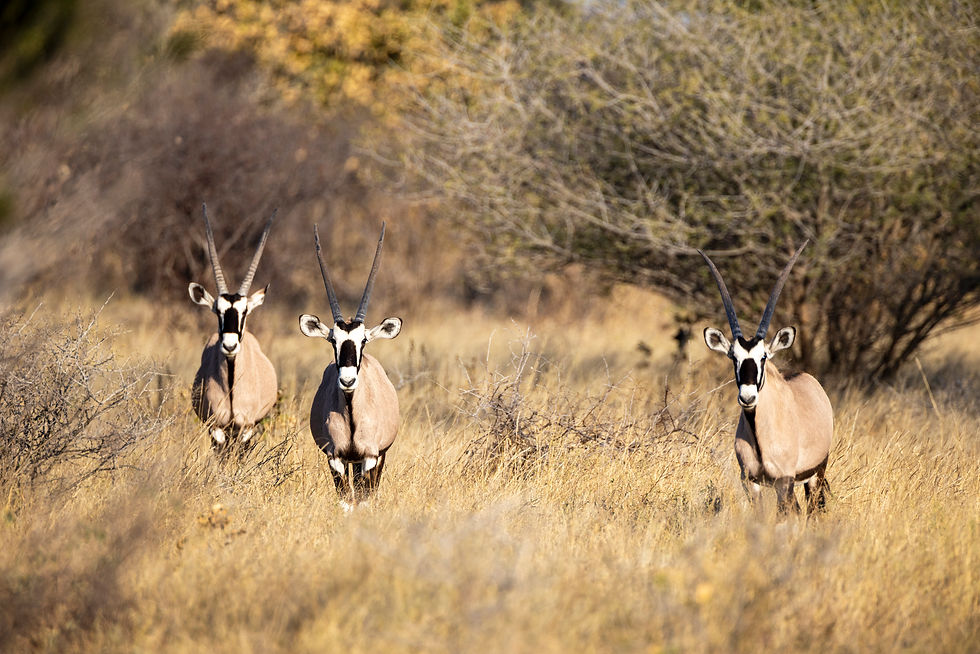
When you first arrive in the Kalahari, you’d think that it’s devoid of wildlife. The opposite is true. Just minutes after we arrive, we photograph oryx, ostrich, steenbok, and springbok. It’s the next morning when we find the king of the Kalahari.
The drive from the lodge is not too far, but just as the sun is coming up, our guide, Booth, kills the engine and listens. Within a minute, we heard the plaintive groans of a mature male lion. We drive in his direction. There he is.
In the soft golden glow of the morning, one of the Kalahari’s most famous lions, Blondie, is slipping through the grass in search of his pride. He’s been out all night patrolling his territory under a full moon. He’s on his last little junket because as the sun gets higher, the temperatures warm, and he’ll seek shade to stay cool and rest.


Now, however, he walks and groans - waiting for a response from the females in the pride. He’ll find them, I know, but for now he’s gracious enough to let us photograph him. We don’t overstay our welcome and soon leave to allow him to continue his patrol. After all, there’s too much to see here to stay with the lion all day.
Every few minutes, we stop and photograph something new. Later in the morning, we retire to the bunker to photograph zebra, jackal, and scores of other wildlife species drinking from a well-placed waterhole.


While you can’t claim that there is any of the proverbial “icing on the cake,” because in reality, it’s all icing, it is special when we find a pair of cheetah brothers. The brothers are hungry, and we stay with them for just a bit to observe and document their behavior.
While it feels premature, before long, it’s time to leave.

“See you later,” I tell the staff. I know it won’t be long before I am back again. Hugs are passed around, well wishes given, and I turn to face home and leave Botswana behind for another few months.
A piece of me always stays behind, however.

We're already gearing up for our 2028 African adventures. No one does Southern Africa like we do.
If you are interested, be sure to send over a note!
ADDITIONAL IMAGES








Love the Botswana post and pix... especially the smiling hippos. 😊😋