Waving at Elephants - A Hackberry Farm Nature Photography Workshops field report

On the bluff above the river on which we cruise, a band of elephants stands next to one another. It's a breeding group consisting of half a dozen mature females, a couple of babies not more than two months old, and a smattering of boisterous juveniles. The day is warm yet still, and as if on cue, many animals head to the water to take a sip before the sun slips low on the horizon.
The boat slows, and everyone on the Beautiful Botswana Nature Photography Workshop swivels in their seats and looks towards the group, cameras at the ready. One by one, each elephant raises its trunk until the tip is about even with the top of its head. The adults do it instinctively, but the younger ones mimic the older ones.
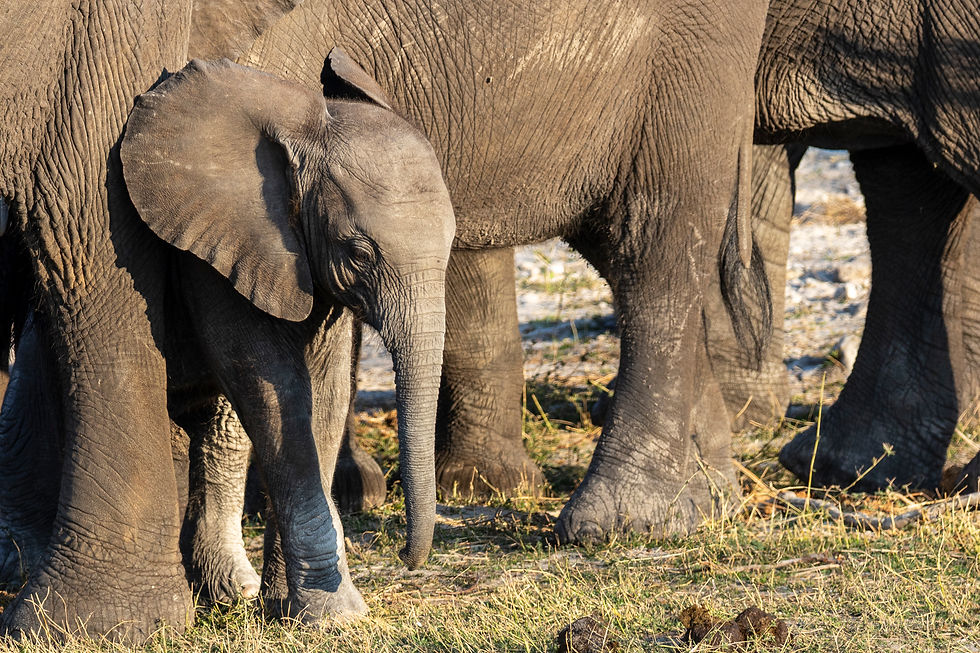
I've seen elephants raise their trunks like this before. Although I am no pachyderm expert, I suspect they do it to test the wind for any danger before proceeding into an area (like the edge of a river) where they'll be somewhat vulnerable to predators.
To me, it's an endearing behavior and one I love to see. As such, each time I see an elephant raise its trunk, it looks like it's waving. Raised in rural Texas, it's part of our culture to wave at people, whether you know them or not. So with that in mind, I spend a lot of time waving at elephants.

Admittedly, waving at elephants is a bit nonsensical. I do it anyway.
Inside their immense frames, covered in thick and wrinkled skin, is a sentient being that is thoughtful, caring, and empathetic. Sure, perhaps not in the way you and I are, but I challenge anyone to spend a little time with wild elephants and really study their behaviors and see how they treat one another and see if you disagree. Inside the behemoths beats a heart with emotions. When you get close to an elephant and look them in the eyes, you'll see that they are an animal as curious about you as you are about them. It's a connection that I cannot explain, but there is a connection that is indeed palpable.
So I wave. Every time I see an elephant, I wave. Often, I am lucky, and they wave back.
God bless these creatures.

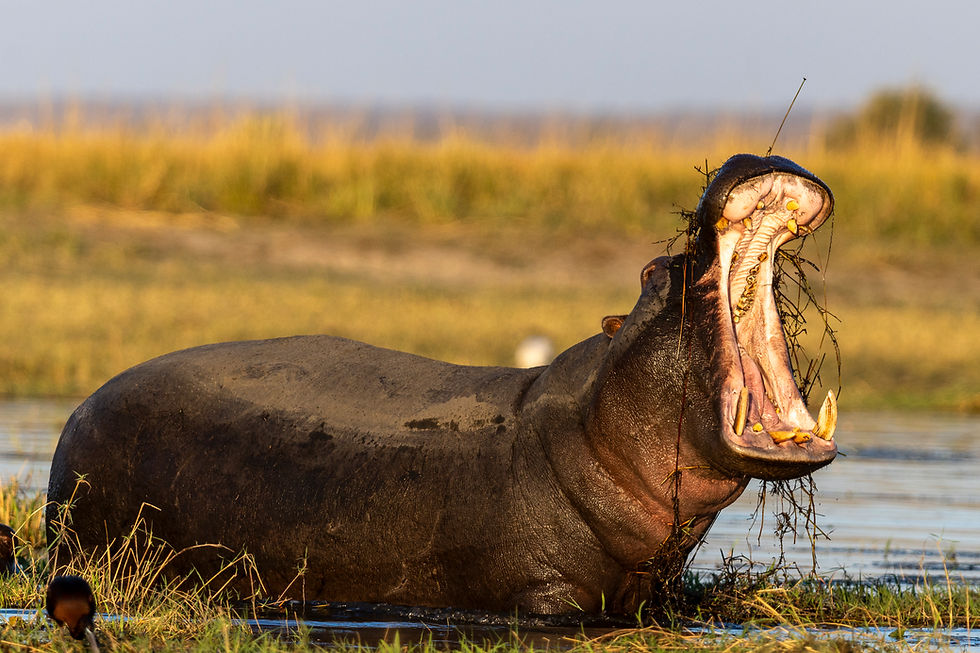
Meanwhile, downstream of the elephants who have now made their way to the river and are swimming over to Namibia to feed on grasses for the night, a group of hippos settles into the shallows for the evening. They grunt at one another as they jockey for position, and occasionally they "yawn' to show off the size of their teeth. It's a warning of sorts to us to keep our distance. We gladly heed their cautionary display and stay far enough back to shoot incredible pictures of the big mammals.
As the hippos posture, yellow-billed storks, sacred ibis, and African spoonbills poke around in the shallow water, searching for a morsel. At times, scenes play out like this one, and if there is such a thing, there is almost too much to photograph, as we never know where to look.
That's Botswana.
A few days and thousands of pictures later, we leave the Chobe River and head southwest to the Okavango Delta.
When I was a kid, I read a story in a magazine about this place—one of the largest inland deltas in the world. The description of the savannah wetlands mesmerized me, and even after multiple trips to the Delta, I am still mesmerized.


The Okavango Delta gets its water from the Angola Highlands each year during the rainy season. The water takes six months to travel from its source to the Botswana flatlands, where it fans out over 5,800 square miles and disappears into the sands of the Kalahari. This landscape sustains an incredible diversity of wildlife.
We land at a remote bush camp along one of the Okavango lagoons. While the land is sparse and wild, the camp is not. We stay at luxury accommodations run by friendly and welcoming people.


After an evening safari drive, we settle in for the night. Across the lagoon, thousands of frogs sing their nightly song as the marshlands come alive. The sound of the ambitions sings me back home as well. Hackberry Farm's wetlands are loaded with frogs who sing us to sleep each night.
Drive after drive, we find out what Mother Nature offers us. Sometimes, it's the various antelopes that are endemic to the Delta. Sometimes, it's lions, leopards, and hyenas. Sometimes, it's the many colorful birds that thrive in the wetlands. Each time you go afield, you can be assured that you'll see something new and exciting.
Our ledger is full. We see baby lions playing with one another or giraffes gliding across the open grasslands flanked by tree mottes and flooded pans. There is so much to see.


On our last leg of the adventure, we land on an airstrip in the Kalahari Desert and drive to the lodge, where Imani and her staff greet us with song when we arrive.
"Welcome home," she tells me and the guests as we disembark the Land Cruisers. She means it, as we're treated like family during our stay. Like this last camp, this one is nice as well.
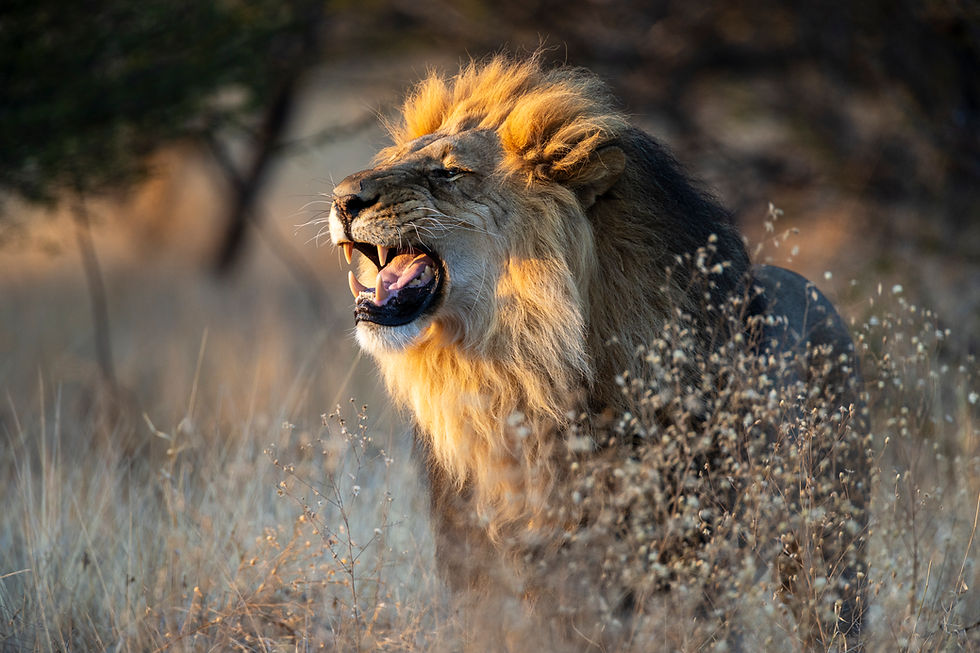
Every excursion brings new surprises from the bush. However, perhaps the biggest surprise was one night in camp, after we had all retired to our rooms, a big mature male lion came through camp, roared a couple of times as if to welcome us, and then went on his way.


Tracks I found the next morning confirmed he was about fifty feet from my domicile. The encounter was the talk of breakfast as each person related their own reaction to the previous night's unexpected excitement. It's one of those stories we'll always remember, and it's all part of the incredible experience we all share together.
On the last morning, we depart the lodge as a warm Botswana breeze weaves across the brushlands. Near the waterhole, a murmuration of quelea shape shifts as they fly in search of a sip of water. As the sun rises, it struggles to cut through the dust. It's a beautiful hue of red, and in a rare moment, we all look at the sun and its perfect orb as its unusually soft light bathes the scrub.
Maybe the blood red sun was an omen.
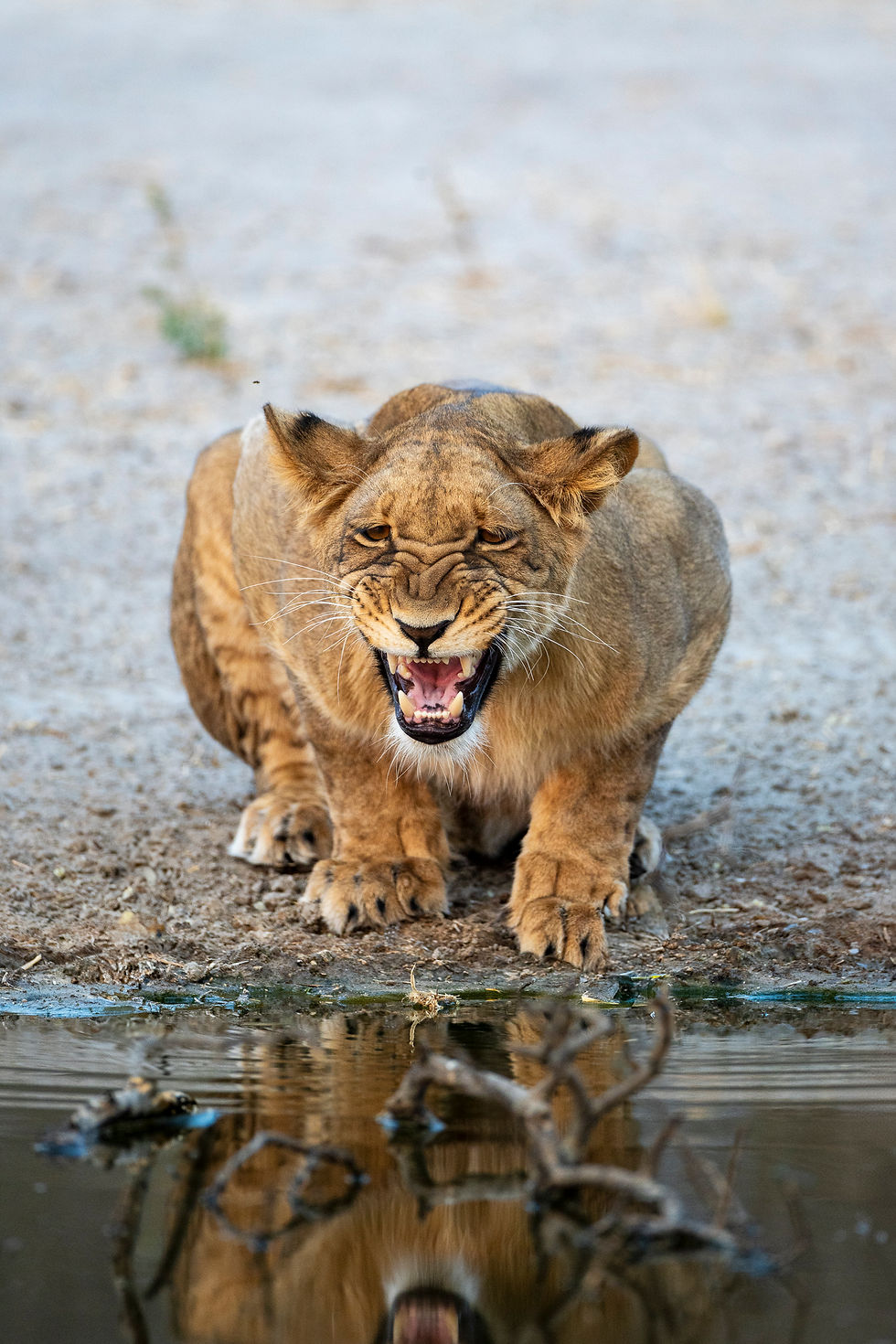
Not two miles from the lodge, our guide Chachos spots a pair of lion tracks crossing the road. He turns around and follows them back in the direction from whence we came. Not fifty yards from where he saw the tracks, we see the head of a lion lying in the brush. Driving the Land Cruiser closer, we see that it's actually two female lions, and they've killed a wildebeest.


While one of the sisters takes a break from eating, the other gorges on the lifeless carcass. It may be hard for some to witness, but on display is the Kalahari's life and death cycle.
Seeing the lion feeding on the wildebeest is a raw, yet reverent thing to witness.
Nature is ambivalent. She doesn't pick winners or losers. Each species makes its own determination as to its ultimate success. It's a brutal but universal law of nature: in order for predators to live, prey has to die.
We watch and photograph for about thirty minutes and then ultimately leave the lions to their meal. We drive around a little more, and just like that, our 11-day safari is done.
After the final safari drive and a round of goodbyes to our hosts, we board our bush plane to leave this magical land. The Cessna Caravan lifts from the dirt airfield, and after a while, I look out the window and see a lone bull elephant with his trunk raised.
I wave.
Sala sentle, Botswana.
###
The tally is in: with two Botswana trips under our belt this year, my total image tally is 97,638! Yes, there really is that many animals to photograph. It may sound like a lot but no one goes to a place like Botswana to take fewer pictures.
###
No one does Botswana like we do! We are beloved by our safari partners(belive me, the feeling is mutual) and they treat us and our guests like family.
We're gearing up for more incredible excursions to Botswana and Africa in 2027. If you'd like to be the first to learn about these itineraries, LET US KNOW!


Comments